Seagoing Buoy Tenders
◆◆◆◆◆◆◆◆◆◆◆◆◆◆◆◆◆◆◆◆◆◆◆◆◆◆◆◆
SEAGOING BUOY TENDERS
◆◆◆◆◆◆◆◆◆◆◆◆◆◆◆◆◆◆◆◆◆◆◆◆◆◆◆◆
The Coast Guard has maintained a fleet of Seagoing Buoy Tenders since its time as the U.S. Lighthouse Service (USLHS) in the early 1900s. Originally designated with the hull classification symbol WAGL, in 1965 that was changed to WLB, which is still in use today. Their primary mission is providing service to all types of aids to navigation within the United States and its territories.
The first Seagoing Buoy Tenders were originally U.S. Army Mine Planters built in 1917-1919 that were transferred to the U.S. Lighthouse Service in the early 1920s. Once under Coast Guard control they were classified as the Speedwell-class cutters. The six ships were 172’ in length and had been modeled after USLHS vessels with similar requirements for handling heavy loads alongside the vessels, which made them easily converted to perform buoy work.
The next version of Seagoing Buoy Tenders also began as U.S. Army Mine Planters built in the early 1940s. These 188’ ships were originally designed for diesel engines but low-pressure steam plants were ultimately installed. Five of them were transferred to the Coast Guard after World War II and classified as the Jonquil-class cutters. They remained in service until the late 1960s and early 1970s.
The third generation of Seagoing Buoy Tenders consisted of two classes of purpose-built, rather than refitted mine planters. The first were the 180’-class cutters of which 39 of the 40 were constructed in Duluth, MN shipyards in the early 1940s. The lone exception was the USCGC IRONWOOD (WAGL/WLB-297), which was constructed at the Coast Guard Yard in Baltimore, MD. There were three sub-classes of 180’ Seagoing Buoy Tenders; 1) Class A-Cactus; 2) Class B-Mesquite; 3) Class C-Iris. Many of them served more than 50 years, some reaching 60. All have been decommissioned and replaced by the 225’ Juniper-class cutters. The final 180’ cutter, USCGC ACACIA (WLB-406), was decommisioned on 7 June 2006.
The second class of purpose-built Seagoing Buoy Tenders are the present-day 225’ Juniper-class cutters. Designed and operated as multi-mission platforms, they are highly more advanced than their 180’ predecessors in speed, communications, navigation, and maneuverability. Additionally, they are equipped to better handle oil/hazardous material recovery, as well as law enforcement, marine & environmental protection, search and rescue, and ice breaking. There are sixteen 225’ cutters in the fleet.
◆◆◆◆◆◆◆◆◆◆◆◆◆◆◆◆◆◆◆◆◆◆◆◆◆◆◆◆
Buoy Tenders
Buoy Tenders


Buoy Tenders


❖❖❖❖❖❖❖❖❖❖❖❖❖❖❖❖❖❖❖❖❖❖❖❖❖❖❖❖❖❖
180’ SEAGOING BUOY TENDERS
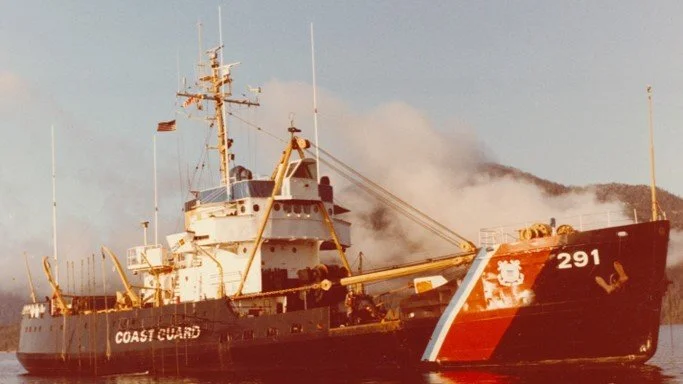
USCGC LAUREL (WLB-291)
180’ Class A (Cactus)-class Seagoing Buoy Tender
Commissioned: 24 November 1942
Decommissioned: 1 December 1999
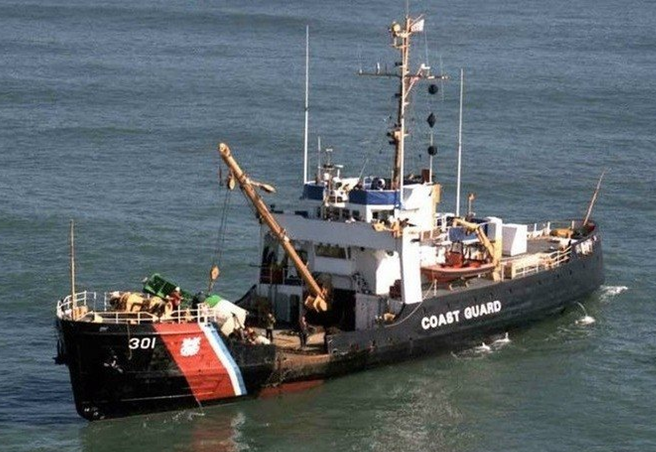
USCGC CONIFER (WLB-301)
180’ Class A (Cactus)-class Seagoing Buoy Tender
Commissioned: 5 May 1943
Decommissioned: 23 June 2000


~~~~~~~~~~~~~~~~~~~~~~~~~~~~~~~~~~~~~~~~~~~
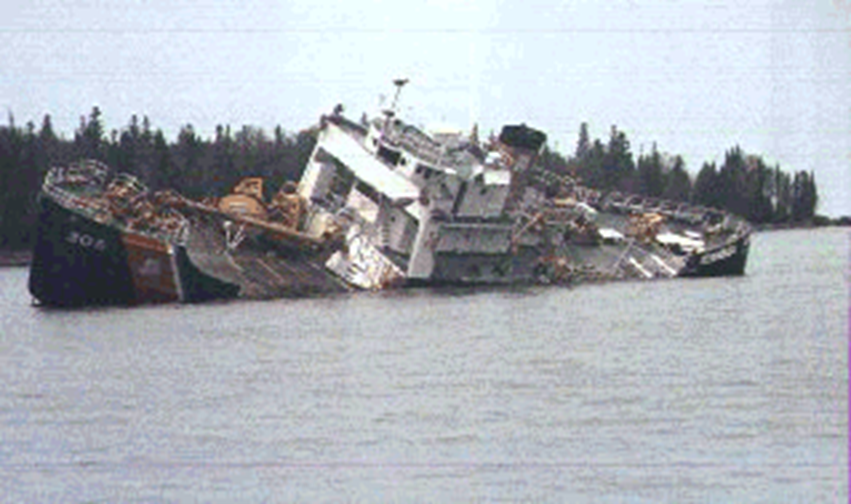
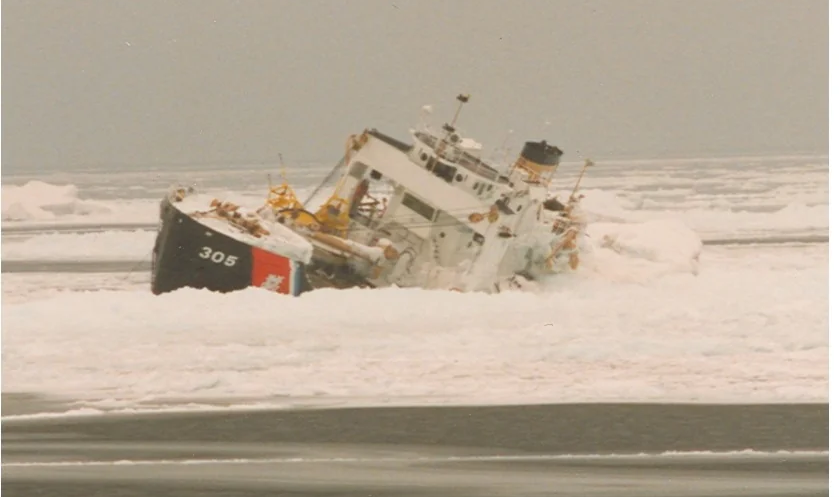
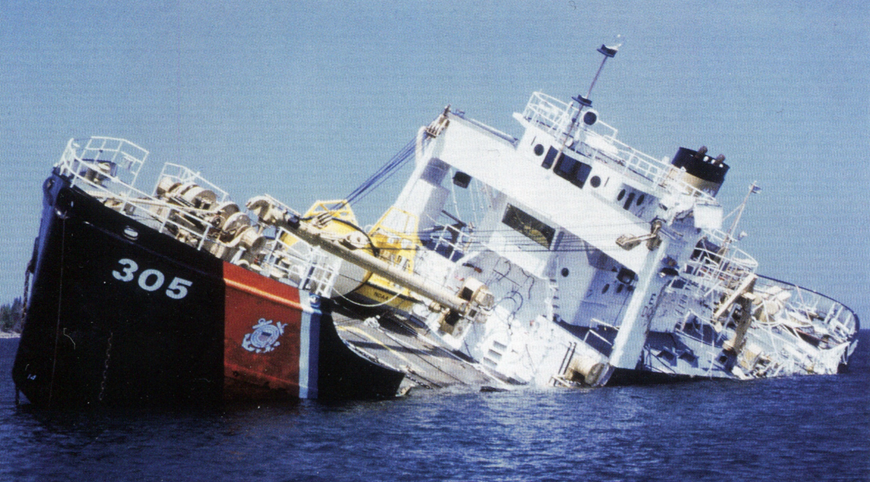
LOSS OF USCGC MESQUITE (WLB-305)
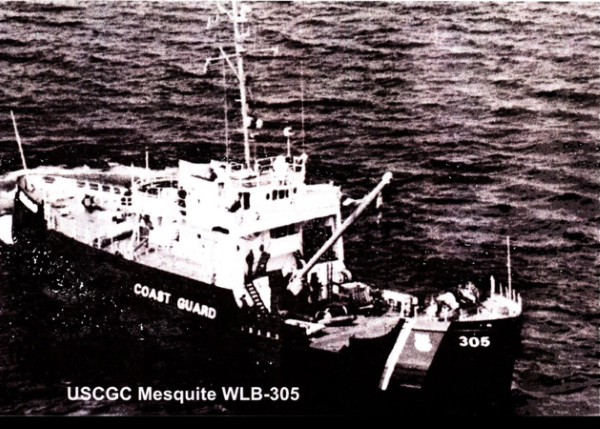
USCGC MESQUITE (WAGL/WLB-305) was the lead ship in the Mesquite-class of Coast Guard Seagoing Buoy Tenders. Commissioned on 27 August 1943, she saw service in the Pacific during World War II. After the war, MESQUITE spent the rest of her career on the Great Lakes homeported in Sault Ste. Marie, MI (1947-1959), Sturgeon Bay, WI (1959-1977), and Charlevoix, MI (1977-1989). Like her sister ships on the Great Lakes, MESQUITE’s primary mission was aids to navigation, particularily the seasonal retrieval and resetting of buoys that is traditional throughout the Coast Guard Ninth District’s Area of Responsibility.
It was customary for the five 180’ Seagoing Buoy Tenders homeported throughout the Great Lakes to cover each other’s Area of Responsibility whenever the need arose. Such was the case in late 1989 as MESQUITE was called upon to work on Lake Superior when USCGC SUNDEW (WLB-404) was delayed in returning from a yard period. On 4 December 1989, while retrieving buoys off Keweenaw Point, MI, MESQUITE ran aground at approximately 0210 shortly after securing the lighted buoy that marked the shoal. The impact penetrated her hull, causing progressive flooding in multiple compartments amid intensifying winds and waves. Despite several hours of valiant efforts to shore the damage, and with MESQUITE beginning to list dangerously to port, the Commanding Officer ordered the crew to abandon ship. Thankfully, all 52 crewmembers were safely evacuated with the assistance of the passing freighter M/V Mangal Desai, nearby Coast Guard units, and Coast Guard Air Station Traverse City, MI.
MESQUITE was considered a total loss due to extensive structural damage and, subsquently, she was officially decommissioned on 31 January 1990. Salvage efforts were halted until the spring of 1990 due to severe winter weather, which caused MESQUITE to remain in place. When it was finally safe to do so, salvers removed all resuable parts and valuables. After the mishap investigation was concluded, MESQUITE was ultimately lowered on 14 July 1990 in 100’ of water in Keystone Bay on Lake Superior where she serves as a wildlife habitat and dive attraction within the Keweenaw Underwater Preserve.
USCGC MESQUITE (WLB-305)
180’ Class B (Mesquite)-class Seagoing Buoy Tender
Commissioned: 27 August 1943
Ran Aground: 4 December 1989
Decommissioned: 31 January 1990
Fate: Scuttled into Lake Superior on 14 July 1990


~~~~~~~~~~~~~~~~~~~~~~~~~~~~~~~~~~~~~~~~~~~
USCGC SWEETGUM (WLB-309)
180’ Class B (Mesquite)-class Seagoing
Buoy Tender
Commissioned: 20 November 1943
Decommissioned: 15 February 2002
USCGC FIREBUSH (WLB-393)
180’ Class C (Iris)-class Seagoing Buoy Tender
Commissioned: 20 July 1944
Decommissioned: 26 May 2003


❖❖❖❖❖❖❖❖❖❖❖❖❖❖❖❖❖❖❖❖❖❖❖❖❖❖❖❖❖❖
225’ JUNIPER-CLASS SEAGOING BUOY TENDERS
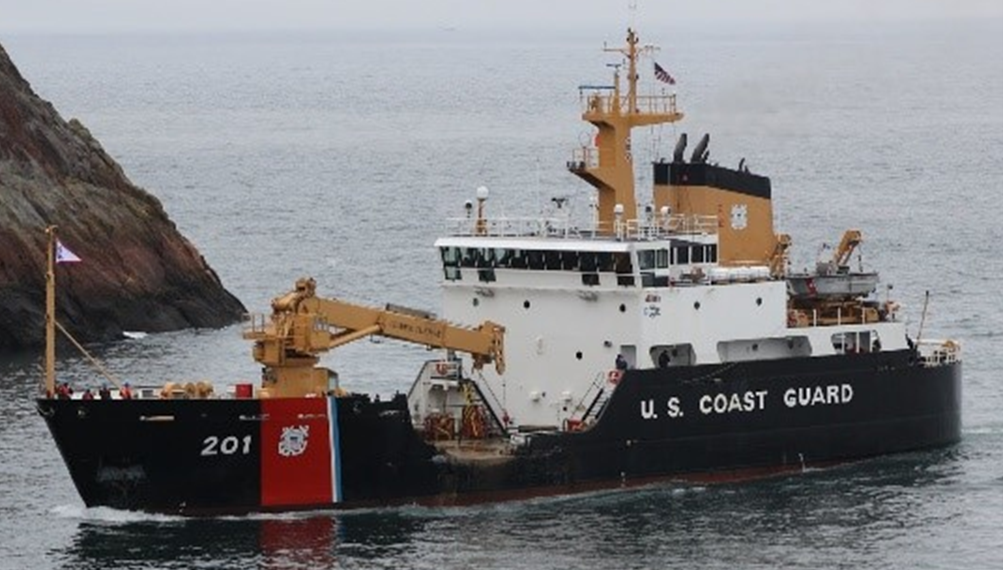
USCGC JUNIPER (WLB-201)
Newport, RI: 1996 - 2019
Honolulu, HI: 2020 - Present
Commissioned: 5 July 1996
USCGC JUNIPER (WLB-201)
Newport, RI: 1996 - 2019
Honolulu, HI: 2020 - Present
Commissioned: 5 July 1996


USCGC JUNIPER (WLB-201)
Newport, RI: 1996 - 2019
Honolulu, HI: 2020 - Present
Commissioned: 5 July 1996
(Blank Serial #)
USCGC JUNIPER (WLB-201)
Newport, RI: 1996 - 2019
Honolulu, HI: 2020 - Present
Commissioned: 5 July 1996
(Serial #164)


USCGC JUNIPER (WLB-201)
Newport, RI: 1996 - 2019
Honolulu, HI: 2020 - Present
Commissioned: 5 July 1996
(Serial #202)
USCGC JUNIPER (WLB-201)
Newport, RI: 1996 - 2019
Honolulu, HI: 2020 - Present
Commissioned: 5 July 1996
(4” L x 1” W)


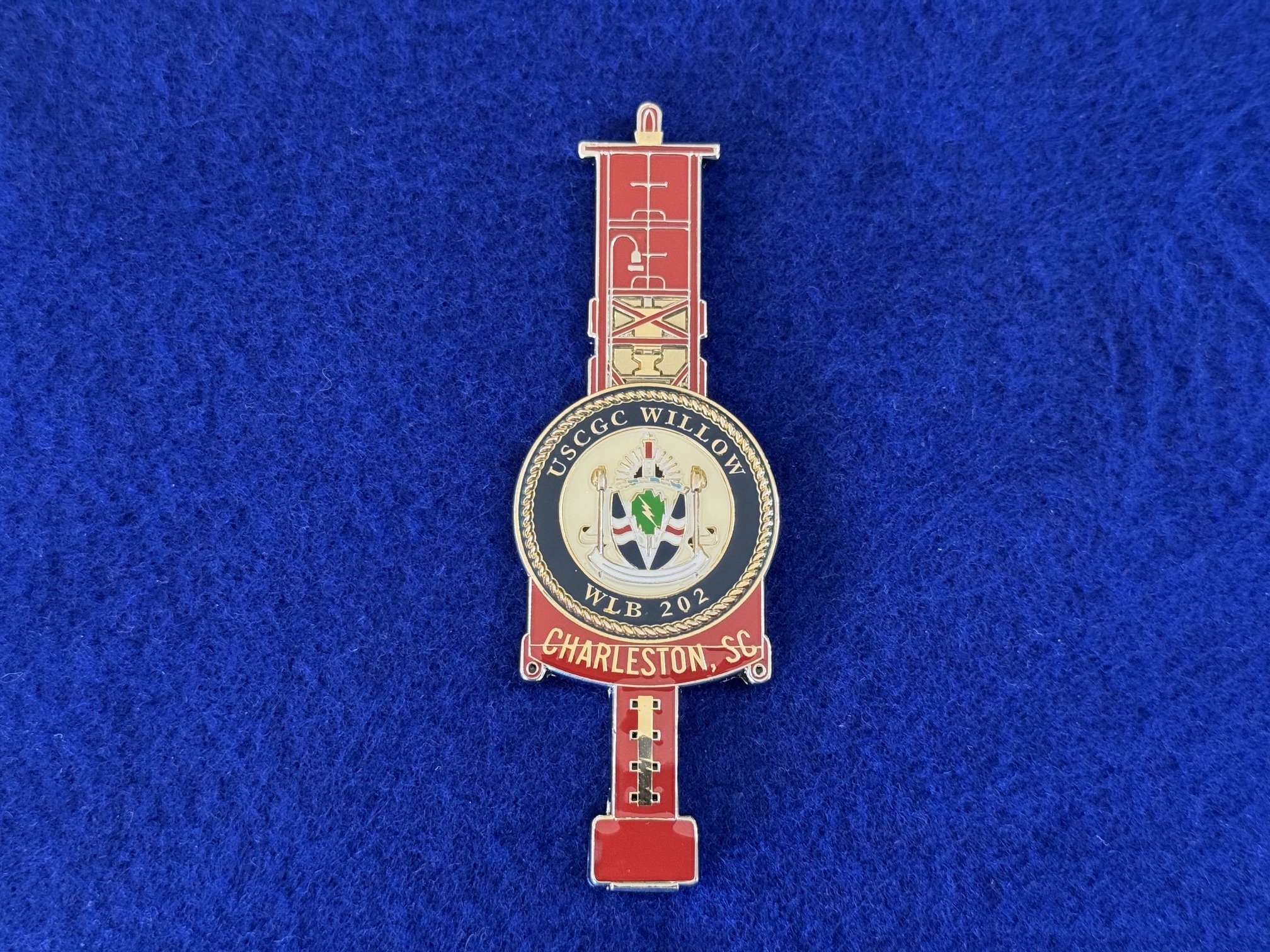
USCGC WILLOW (WLB-202)
Newport, RI: 1997 - 2017
Charleston, SC: 2017 - Present
Commissioned: 10 April 1997
USCGC WILLOW (WLB-202)
Newport, RI: 1997 - 2017
Charleston, SC: 2017 - Present
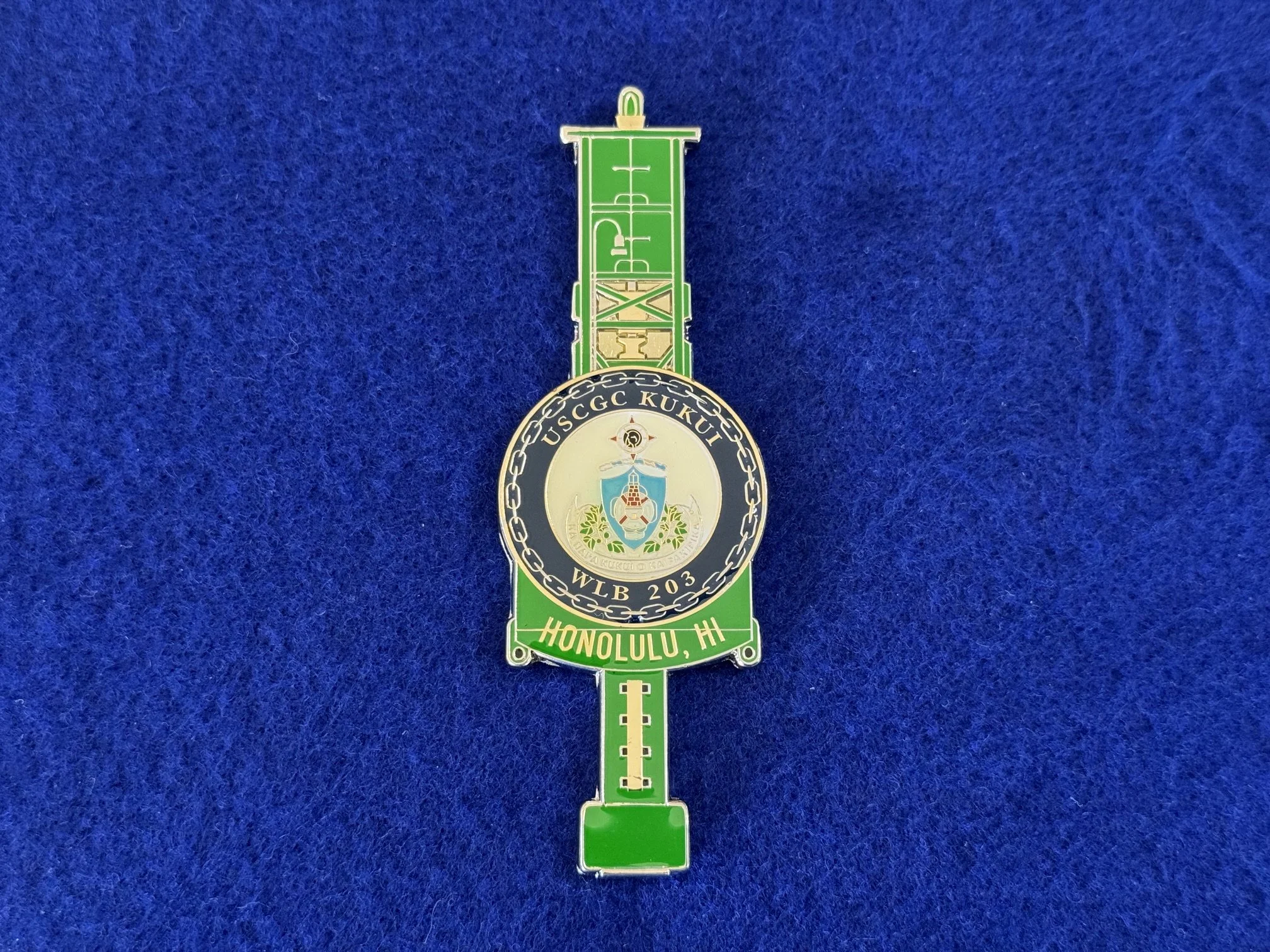
USCGC KUKUI (WLB-203)
Honolulu, HI: 1998 - 2017
Sitka, AK: 2018 - Present
(3-3/4” H x 1-1/4” W)


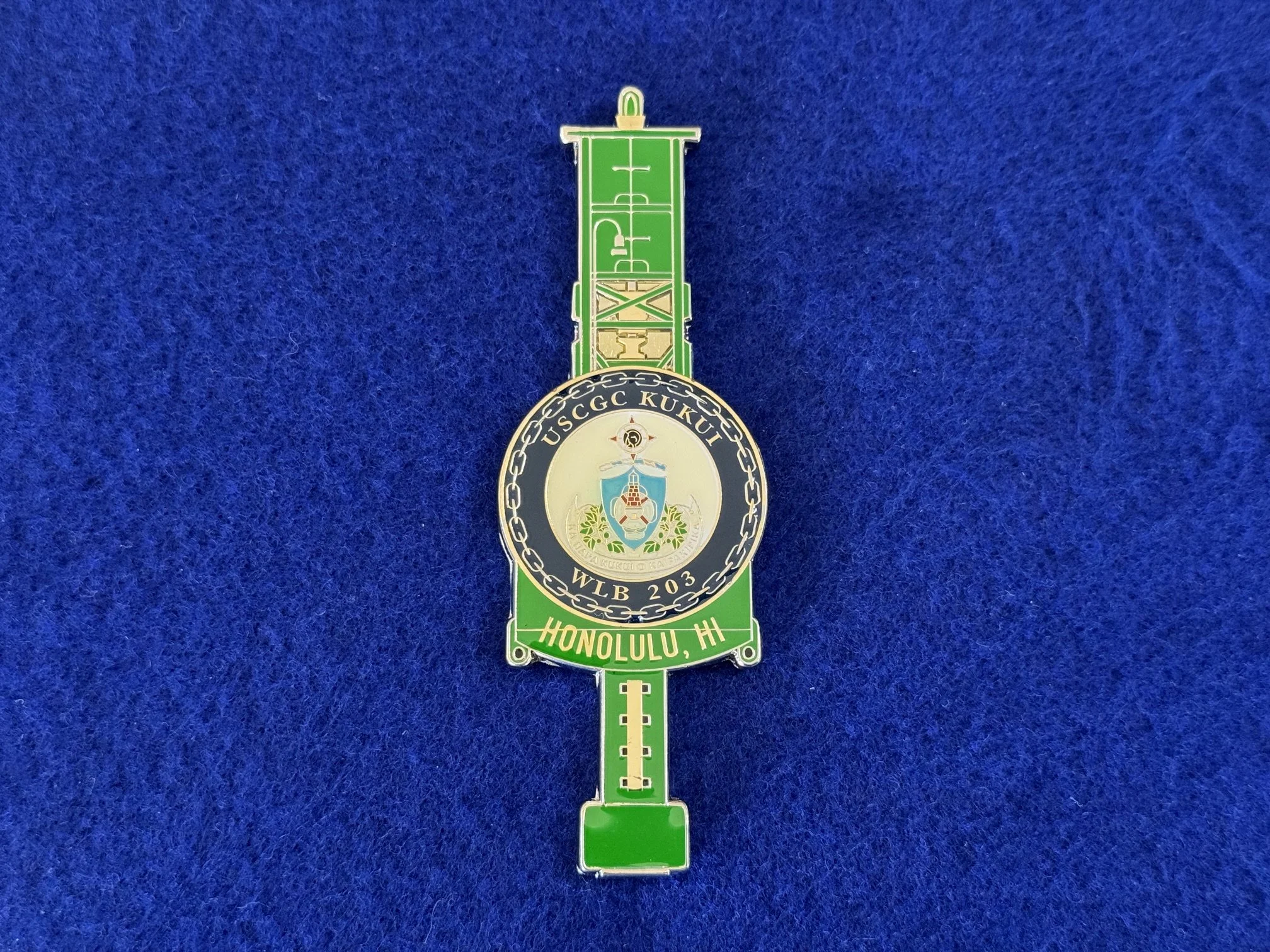
USCGC KUKUI (WLB-203)
Honolulu, HI: 1998 - 2017
Sitka, AK: 2018 - Present
Commissioned: 9 January 1998
USCGC KUKUI (WLB-203)
Honolulu, HI: 1998 - 2017
Sitka, AK: 2018 - Present
Commissioned: 9 January 1998


USCGC KUKUI (WLB-203)
Honolulu, HI: 1998 - 2017
Sitka, AK: 2018 - Present
USCGC WILLOW (WLB-202)
Newport, RI: 1997 - 2017
Charleston, SC: 2017 - Present
(3-3/4” H x 1-1/4” W)
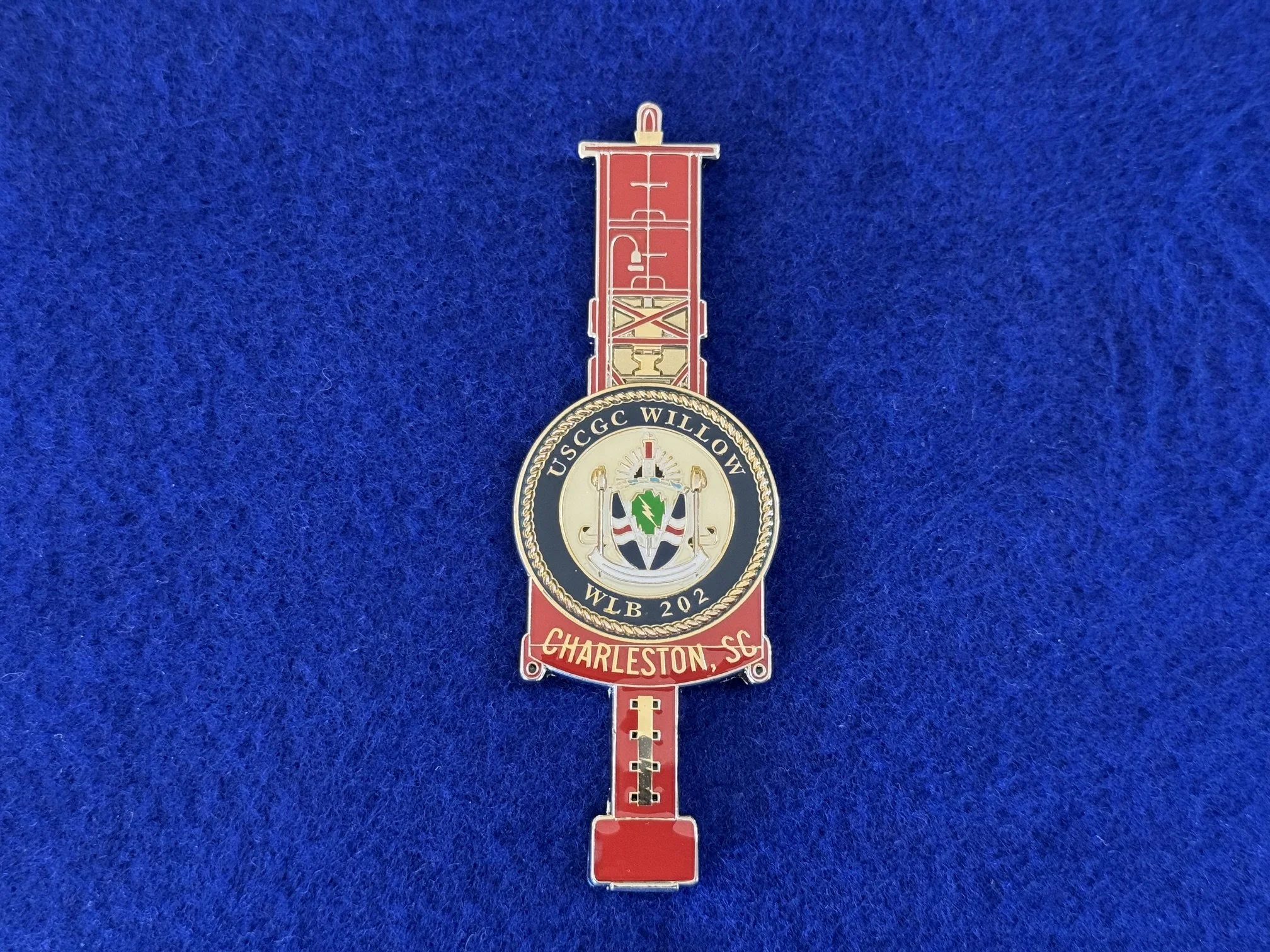
USCGC ELM (WLB-204)
Atlantic Beach, NC: 1998 - 2018
Astoria, OR: 2019 - Present
Commissioned: 20 November 1998
USCGC ELM (WLB-204)
Atlantic Beach, NC: 1998 - 2018
Astoria, OR: 2019 - Present
Commissioned: 20 November 1998


USCGC ELM (WLB-204)
Atlantic Beach, NC: 1998 - 2018
Astoria, OR: 2019 - Present
Commissioned: 20 November 1998


USCGC SPAR (WLB-206)
Kodiak, AK: 2001 - 2021
Duluth, MN: 2022 - Present
Commissioned: 3 August 2001
USCGC SPAR (WLB-206)
Kodiak, AK: 2001 - 2021
Duluth, MN: 2022 - Present
USCGC ALDER (WLB-216)
Duluth, MN: 2005 - 2022
San Francisco, CA: 2023 - Present
(3-3/4” H x 1-1/4” W)


USCGC MAPLE (WLB-207)
Sitka, AK: 2001 - 2017
Atlantic Beach, NC: 2018 - Present
Commissioned: 19 October 2001
(2-1/2” diameter)
USCGC MAPLE (WLB-207)
Sitka, AK: 2001 - 2017
Atlantic Beach, NC: 2018 - Present
Commissioned: 19 October 2001
(2-1/2” diameter)


USCGC ASPEN (WLB-208)
San Francisco, CA: 2002 - 2022
Homer, AK: 2023 - Present
Commissioned: 24 January 2002
USCGC ASPEN (WLB-208)
San Francisco, CA: 2002 - 2022
Homer, AK: 2023 - Present
Commissioned: 24 January 2002


USCGC SYCAMORE (WLB-209)
Cordova, AK: 2002 - 2019
Newport, RI: 2020 - Present
Commissioned: 2 July 2002


USCGC CYPRESS (WLB-210)
Mobile, AL: 2002 - 2011
Pensacola, FL: 2011 - 2020
Kodiak, AK: 2021 - Present
Commissioned: 11 October 2002
USCGC CYPRESS (WLB-210)
Mobile, AL: 2002 - 2011
Pensacola, FL: 2011 - 2020
Kodiak, AK: 2021 - Present
Commissioned: 11 October 2002
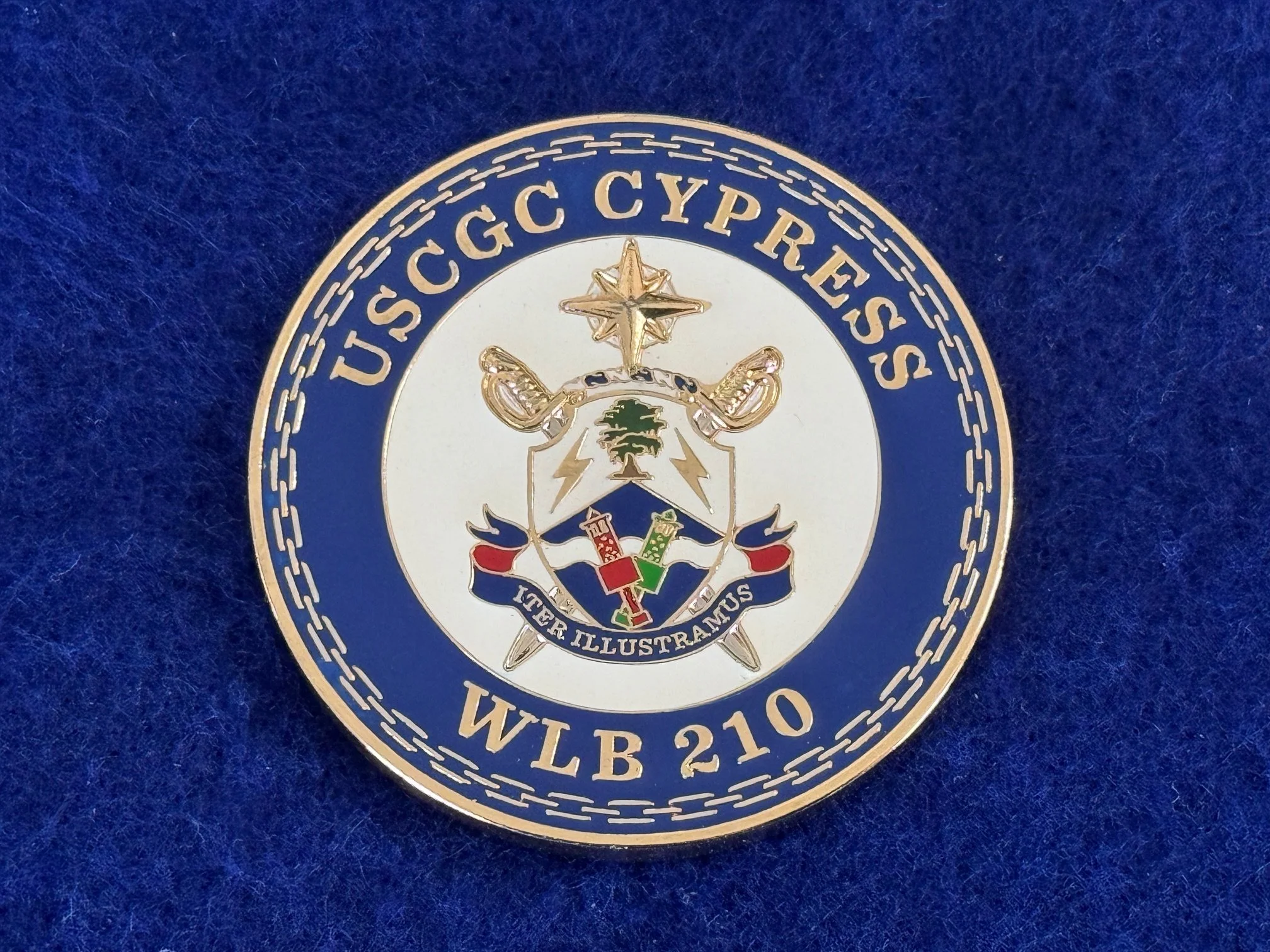
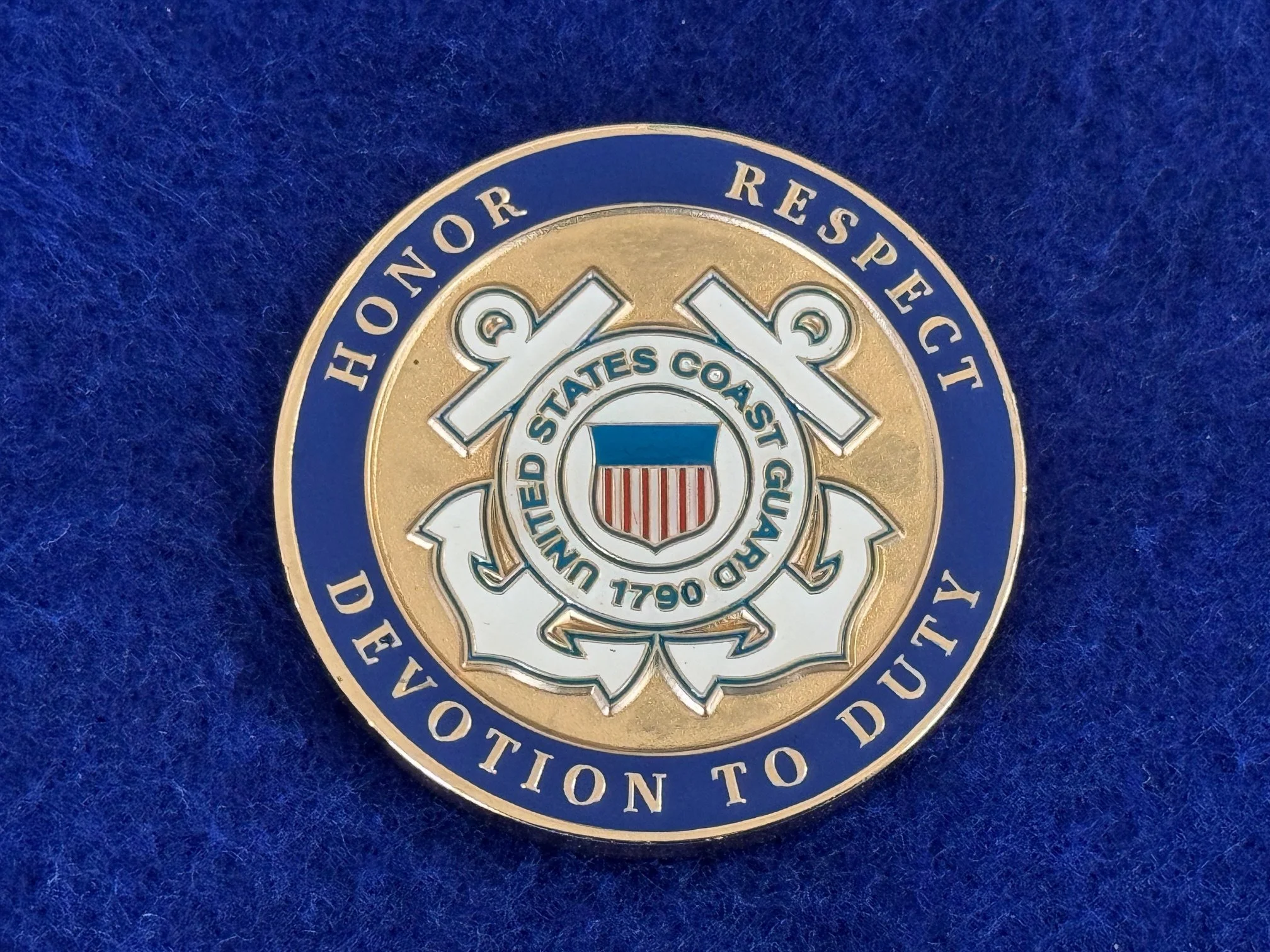


USCGC CYPRESS (WLB-210)
Mobile, AL: 2002 - 2011
Pensacola, FL: 2011 - 2020
Kodiak, AK: 2021 - Present
Commissioned: 11 October 2002
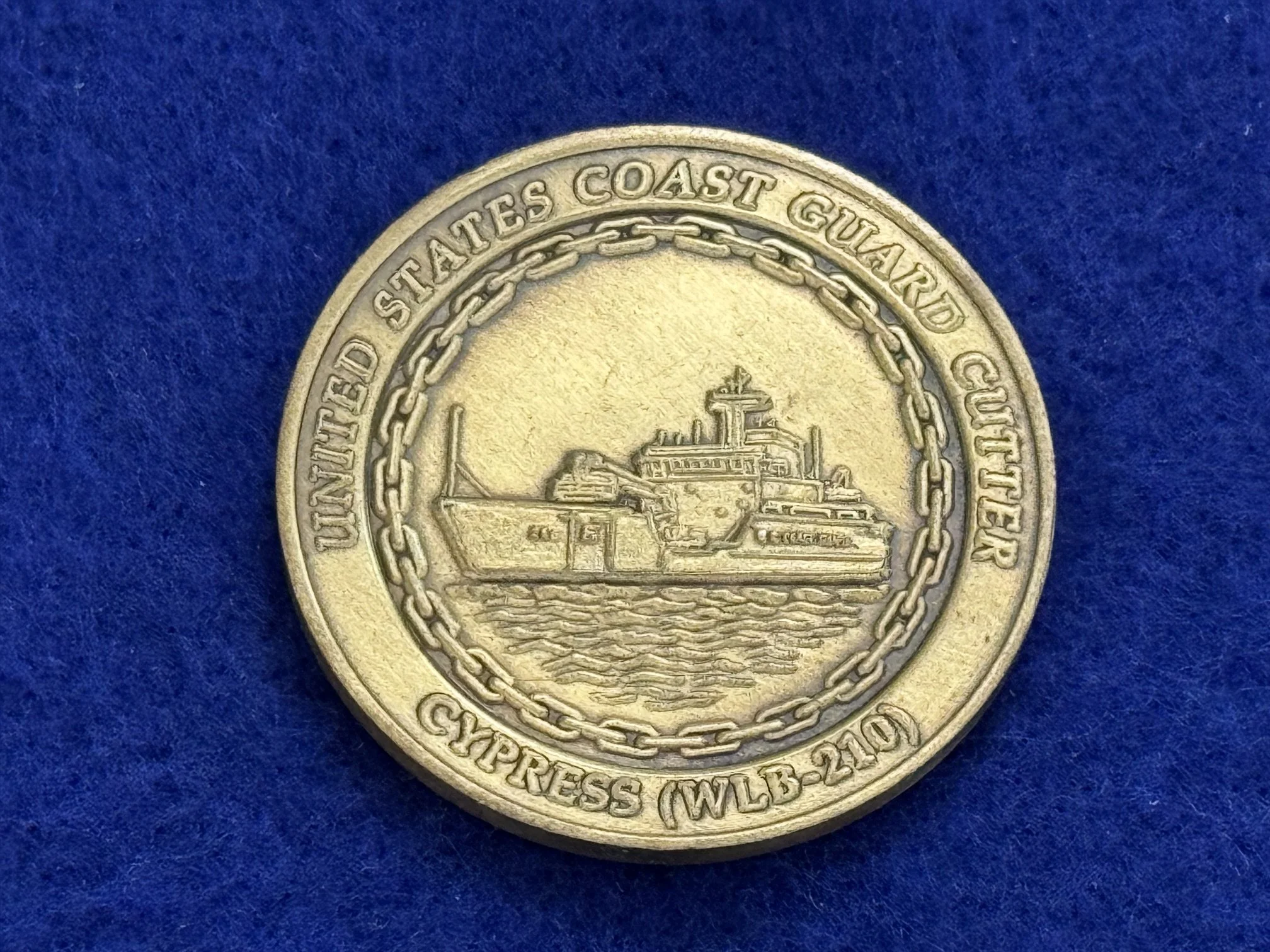
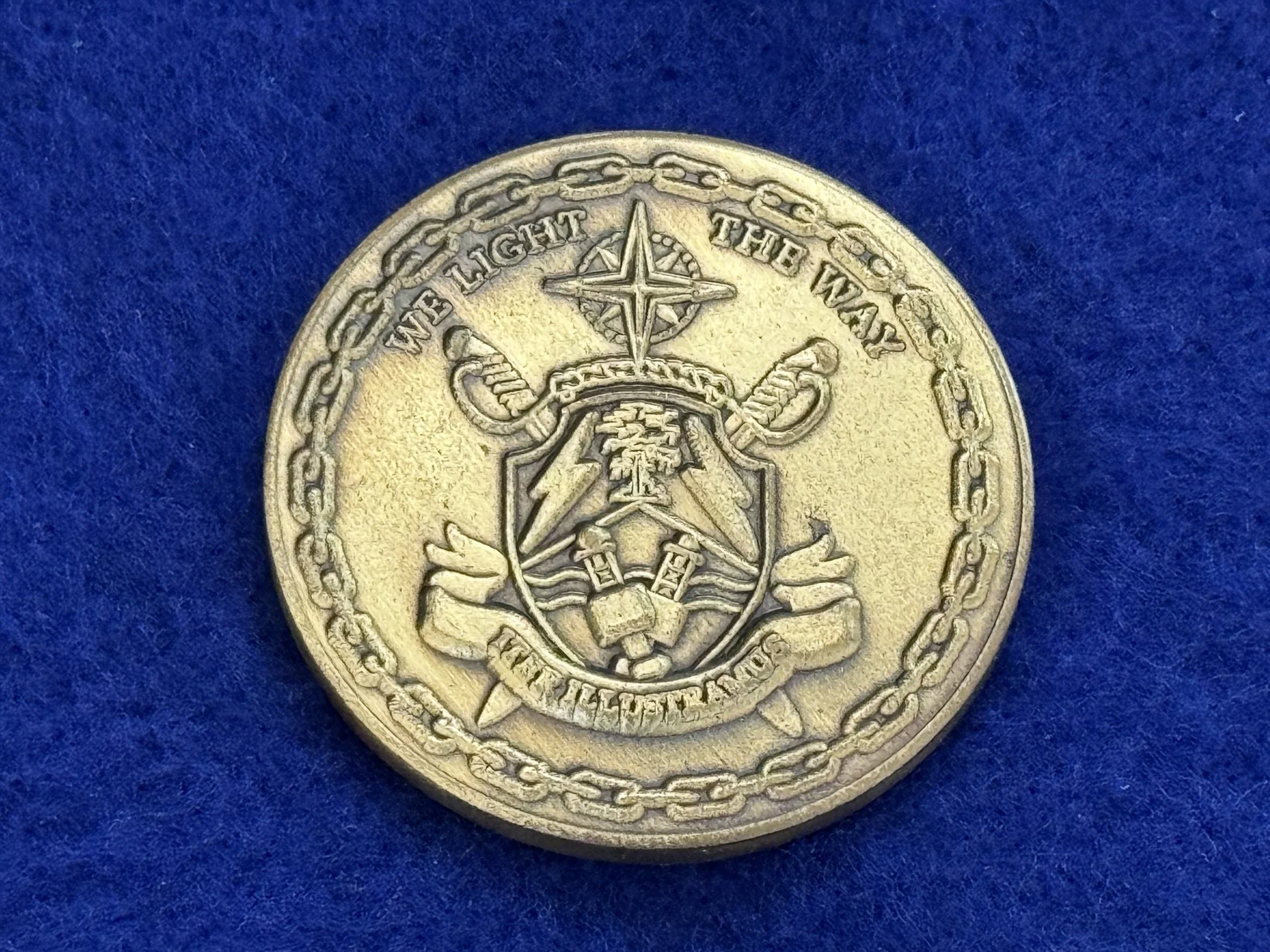
USCGC CYPRESS (WLB-210)
Mobile, AL: 2002 - 2011
Pensacola, FL: 2011 - 2020
Kodiak, AK: 2021 - Present
Commissioned: 11 October 2002
(3-1/2” H x 1-1/4” W)


USCGC CYPRESS (WLB-210)
Mobile, AL: 2002 - 2011
Pensacola, FL: 2011 - 2020
Kodiak, AK: 2021 - Present
Commissioned: 11 October 2002
(Gold Trim)
(4.5” L x 2” H)
USCGC CYPRESS (WLB-210)
Mobile, AL: 2002 - 2011
Pensacola, FL: 2011 - 2020
Kodiak, AK: 2021 - Present
Commissioned: 11 October 2002
(Copper Trim)
(4.5” L x 2” H)


USCGC CYPRESS (WLB-210)
Mobile, AL: 2002 - 2011
Pensacola, FL: 2011 - 2020
Kodiak, AK: 2021 - Present
Commissioned: 11 October 2002
(Black Trim)
(4-1/2” L x 2” H)


USCGC OAK (WLB-211)
Charleston, SC: 2003 - 2015
Newport, RI: 2016 - Present
Commissioned: 7 March 2003
USCGC OAK (WLB-211)
Charleston, SC: 2003 - 2015
Newport, RI: 2016 - Present
Commissioned: 7 March 2003


USCGC HICKORY (WLB-212)
Homer, AK: 2003 - 2022
Santa Rita, GU: 2023 - Present
Commissioned: 15 November 2003
USCGC HICKORY (WLB-212)
Homer, AK: 2003 - 2022
Santa Rita, GU: 2023 - Present
Commissioned: 15 November 2003


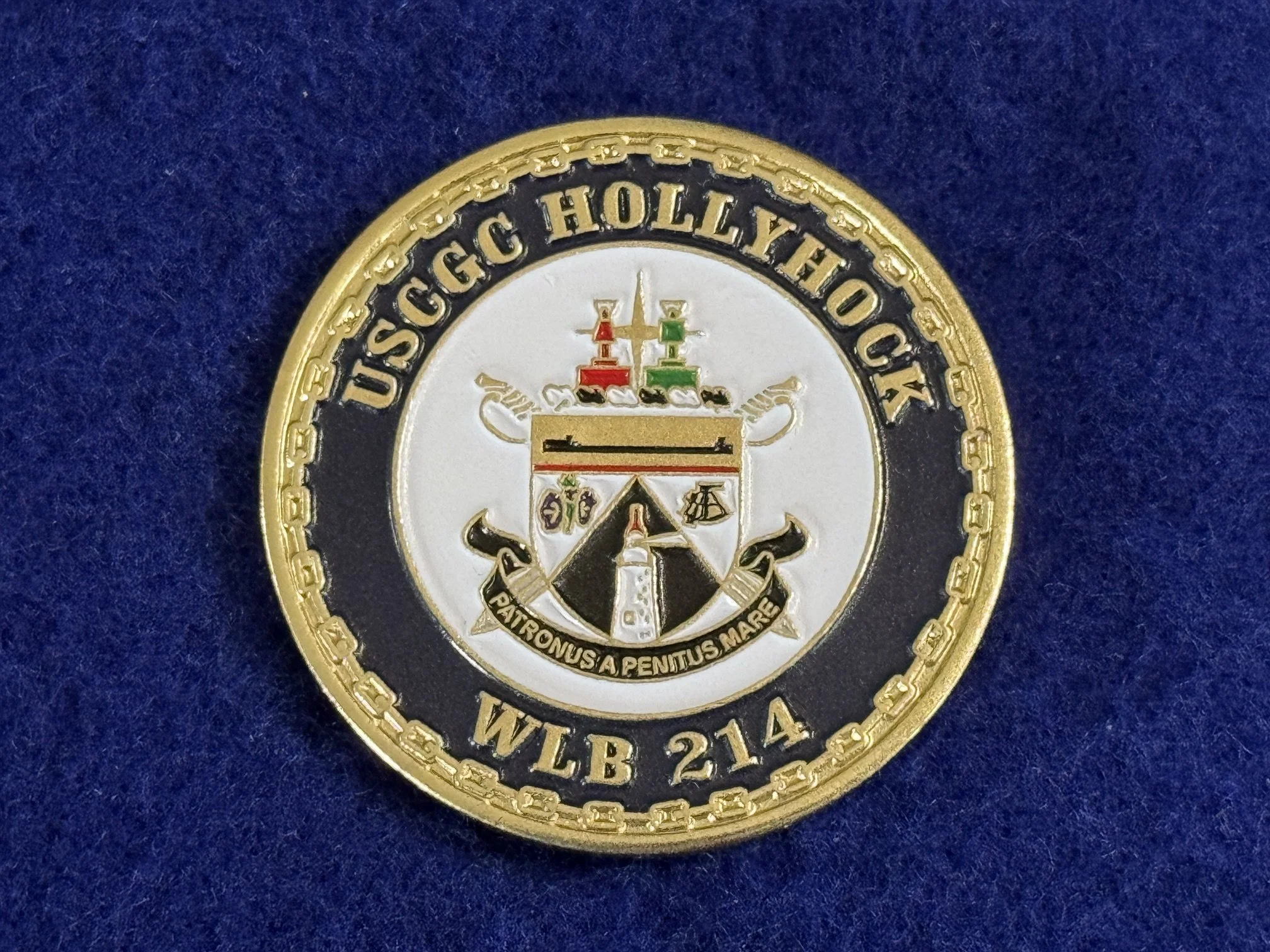
USCGC HOLLYHOCK (WLB-214)
Port Huron, MI: 2003 - 2023
Honolulu, HI: 2025 - Present
Commissioned: 15 November 2003
USCGC HOLLYHOCK (WLB-214)
Port Huron, MI: 2003 - 2023
Honolulu, HI: 2025 - Present
Commissioned: 15 November 2003
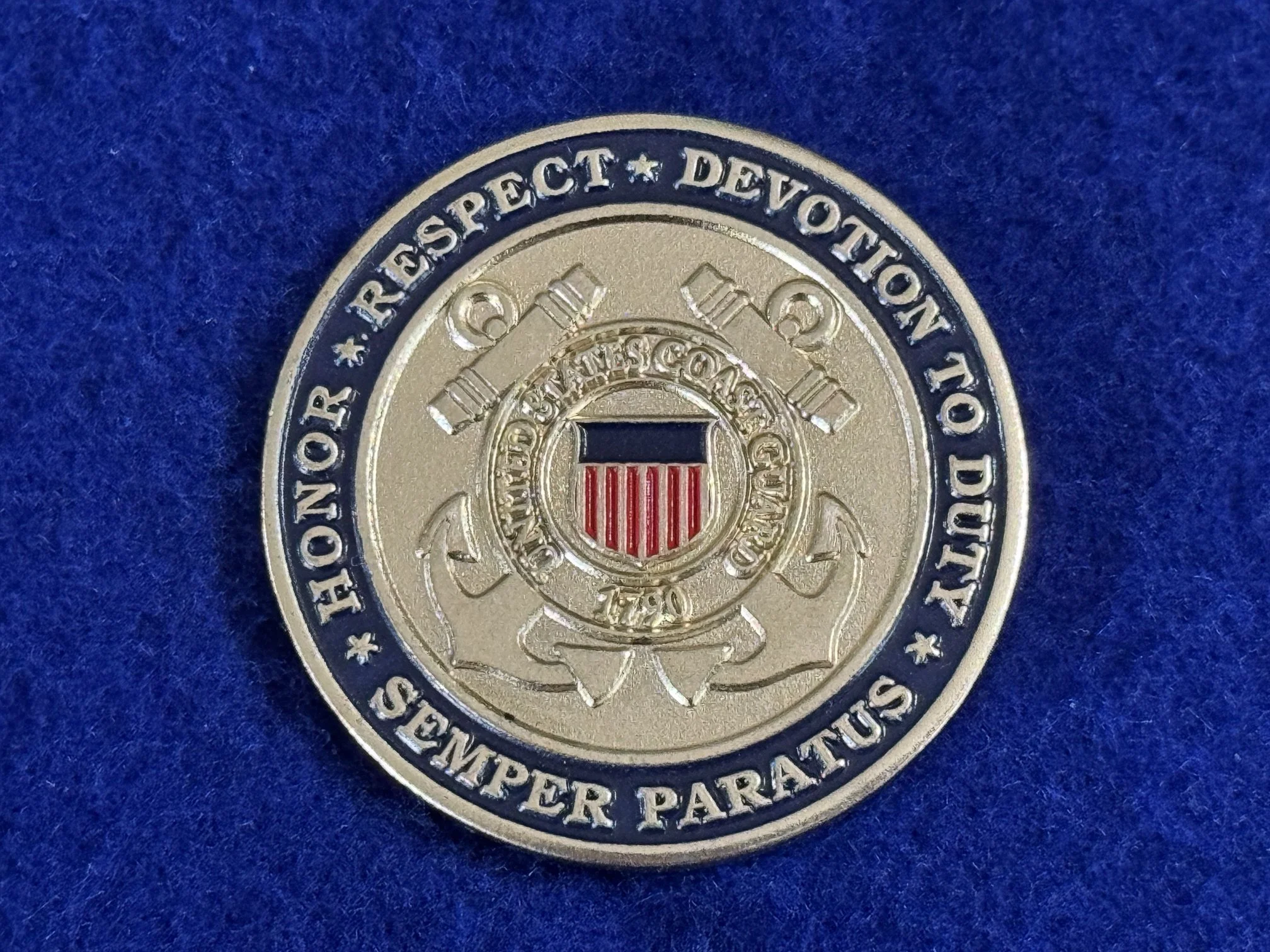


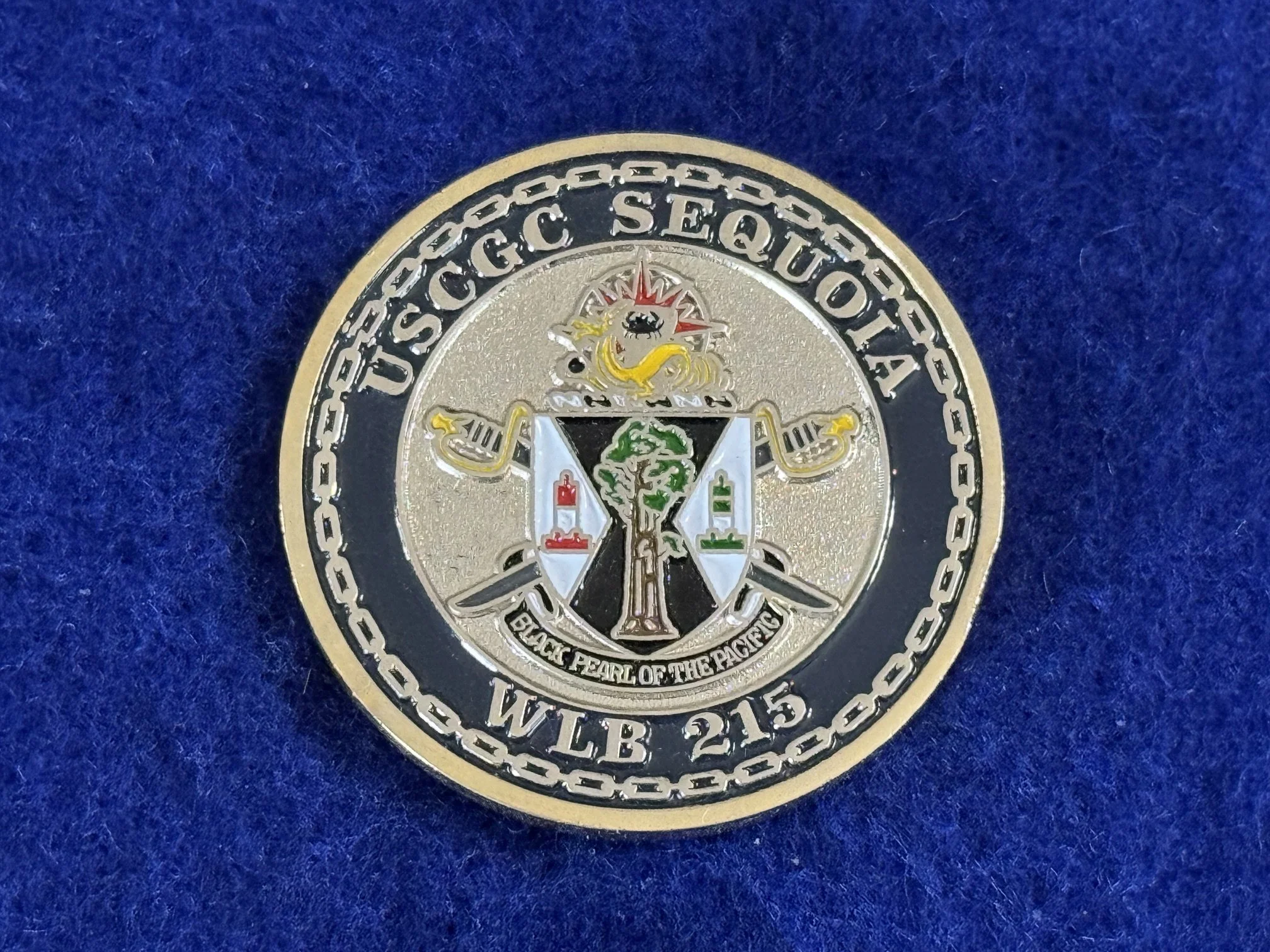
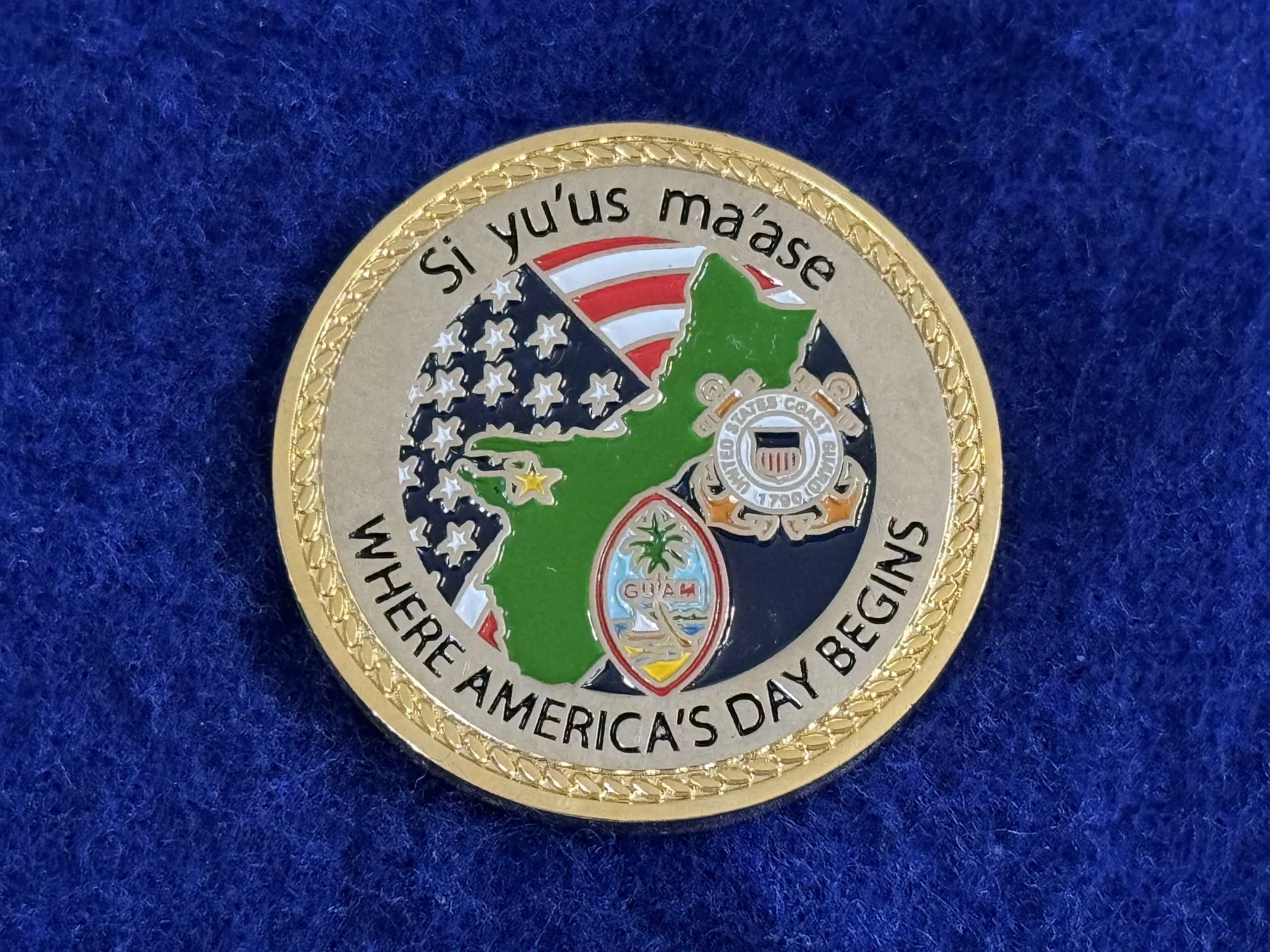
USCGC SEQUOIA (WLB-215)
Santa Rita, GU: 2004 - 2023
Port Huron, MI: 2024 - Present
Commissioned: 15 October 2004
USCGC SEQUOIA (WLB-215)
Santa Rita, GU: 2004 - 2023
Port Huron, MI: 2024 - Present
Commissioned: 15 October 2004


USCGC ALDER (WLB-216)
Duluth, MN: 2005 - 2021
San Francisco, CA: 2022 - Present
Commissioned: 10 June 2005


USCGC ALDER (WLB-216)
Duluth, MN: 2005 - 2021
San Francisco, CA: 2022 - Present
Commissioned: 10 June 2005
USCGC ALDER (WLB-216)
Duluth, MN: 2005 - 2021
San Francisco, CA: 2022 - Present
Commissioned: 10 June 2005


USCGC ALDER (WLB-216)
Duluth, MN: 2005 - 2022
San Francisco, CA: 2023 - Present
USCGC SPAR (WLB-206)
Kodiak, AK: 2001 - 2021
Duluth, MN: 2022 - Present
(3-3/4” H x 1-1/4” W)

